


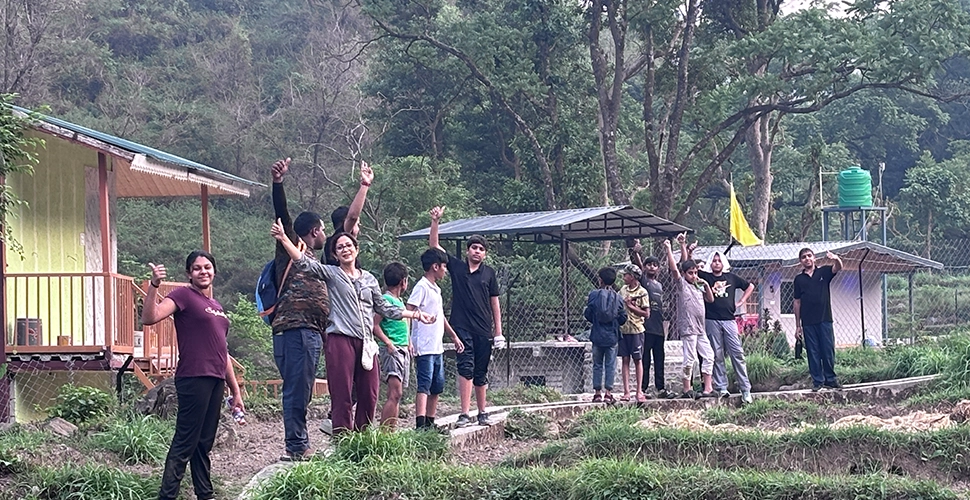
Tucked away in the serene outskirts of Rishikesh, Junegiri sits quietly between forested hills and the flowing Ganges, offering a peaceful escape into nature. The landscape is a blend of riverbanks, lush greenery, and simple village life, where the rhythm of daily living feels slower and more connected. Known for its spiritual energy and natural richness, this region creates a calming yet inspiring environment for exploration and reflection.
At Junegiri, learners step into a living ecosystem where sustainability is experienced through everyday actions. From interacting with local communities to understanding modern practices like hydroponics, learning happens through doing rather than just observing. Walking through forests, engaging in plantation activities, and reflecting on everyday choices helps students develop awareness, responsibility, and a more conscious way of thinking about the world around them.
EDUCATIONAL OUTCOMES
This program encourages students to think beyond theory by engaging with real examples of sustainable living, food systems, and environmental care. It strengthens decision-making, builds awareness of everyday impact, and helps students become more thoughtful, informed individuals.
KEY LEARNING OUTCOMES
A hands-on sustainability program that encourages awareness, responsibility, and practical understanding through immersive nature and community experiences. Students explore sustainable practices, understand local ecosystems, engage with communities, and observe the relationship between people and natural resources. These experiences nurture environmental responsibility, critical thinking, collaboration, problem-solving, and lifelong habits for sustainable living.
- Green living practices through sustainable farming exposure.
- Personal growth through collaboration and shared responsibilities.
- Young environmental stewards exploring river and forest ecosystems.
- Practical learning through action-based conservation activities.
PROGRAMME HIGHLIGHTS
A thoughtfully designed program that blends sustainability, nature immersion, and community interaction to create a meaningful and balanced learning experience focused on real-world impact.
Adventure
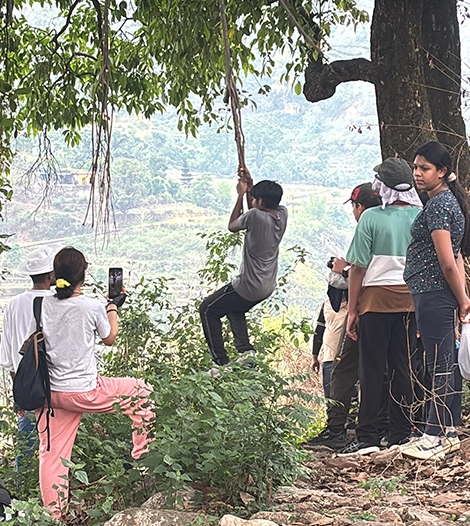
Nature walks, river exploration, and outdoor activities encourage movement, curiosity, and confidence while helping students actively engage with their surroundings.
Biodiversity
Exploring forest trails, river ecosystems, and birdlife helps students understand ecological balance and develop a deeper respect for nature and conservation.
Culture
Village interactions and local engagement provide insight into traditional lifestyles, fostering empathy, understanding, and respect for community-based living.
Wellness
Peaceful surroundings, mindful activities, and time away from screens support emotional balance, focus, and overall well-being in a natural environment.
Frequently Asked Questions
Yes. Mowgli Camp operates under an ISO 9001:2015 Certified Quality Management System, reflecting our commitment to quality, student safety and structured learning.
Mowgli Camp offers experiential learning programmes for school students through nature, wildlife, adventure, and community engagement, helping children develop leadership, confidence, environmental awareness, and essential life skills beyond the classroom.
Mowgli Camp welcomes students from Classes IV to XII. Every programme is age-appropriate and customised to match each school's learning objectives and student abilities.
Unlike sightseeing tours, Mowgli Camp combines experiential learning with adventure, biodiversity, culture, sustainability, teamwork, and personal growth, ensuring every activity has meaningful educational outcomes aligned with school learning.
Mowgli Camp conducts programmes across Himalayan destinations, tiger reserves, rural and tribal villages, biodiversity parks, wetlands, bird sanctuaries, and heritage locations throughout India.
Yes. Mowgli Camp follows strict safety protocols, trained instructors, risk assessments, emergency response plans, and first-aid preparedness to ensure every student's safety throughout the programme.
Mowgli Camp introduces students to wildlife, biodiversity, conservation, geography, ecosystems, rural livelihoods, tribal traditions, leadership, teamwork, communication, responsible travel, and sustainable living through hands-on experiences.
Yes. Mowgli Camp encourages respectful interactions with rural and tribal communities through village walks, cultural exchanges, local crafts, farming practices, traditional cuisine, architecture, and conservation-based learning.
Yes. Mowgli Camp provides regular updates, photographs, and important information to schools and parents throughout the programme, subject to network availability.
Yes. Mowgli Camp programmes are suitable for CBSE, ICSE, IB, Cambridge, and other educational boards, with customised learning outcomes to meet different academic requirements.
Yes. Mowgli Camp organises programmes throughout the year, carefully selecting destinations based on weather conditions, seasonal biodiversity, temperature, and student safety.
Mowgli Camp's rural immersion programme allows students to experience village life by interacting with local communities, exploring traditional architecture, crafts, farming, cuisine, culture, and sustainable lifestyles.
Yes. Mowgli Camp programmes are designed in alignment with NEP 2020, promoting experiential learning, skill development, critical thinking, environmental education, holistic growth, and mindful learning through real-world experiences.