



Set in the buffer zone of Pench Tiger Reserve, this offbeat eco camp offers a raw and immersive forest experience far from crowded tourist circuits. Surrounded by teak forests, riverbeds, and quiet wilderness, the region is rich with wildlife and known for inspiring Rudyard Kipling’s The Jungle Book. The chance to spot the rare Indian Giant Flying Squirrel, along with diverse birdlife and forest species, makes this landscape both exciting and deeply engaging
For students, this is about living the jungle rather than just visiting it. Walking through forests, cycling along quiet trails, and interacting with local communities helps them understand how life exists alongside wildlife. The simplicity of camp life, combined with hands-on exploration, encourages independence, teamwork, and a genuine connection with nature in its most authentic form.
EDUCATIONAL OUTCOMES
Students learn by being present in the ecosystem—reading animal tracks, observing bird behaviour, and understanding how forests function. The experience builds awareness, patience, and curiosity while helping them develop a grounded perspective on conservation, community living, and sustainable choices.
KEY LEARNING OUTCOMES
A nature-immersive journey that builds awareness, resilience, and curiosity through direct interaction with forest ecosystems and rural life. Participants explore natural habitats, observe wildlife, understand local traditions, and engage with communities, developing deeper environmental sensitivity, practical learning, teamwork, and a meaningful connection with nature and sustainable living.
- Eco tourism through low-impact, community-based travel
- Personal growth through outdoor living and exploration.
- Young naturalists observing wildlife behaviour and habitats.
- Community learning through village interaction and coexistence
PROGRAMME HIGHLIGHTS
A truly offbeat wilderness program that combines eco-living, community interaction, and forest exploration to create a holistic learning experience rooted in simplicity, sustainability, and connection.
Adventure
Forest walks, cycling trails, and jeep safaris create an active and engaging environment, helping students build confidence, adaptability, and a spirit of exploration.
Culture
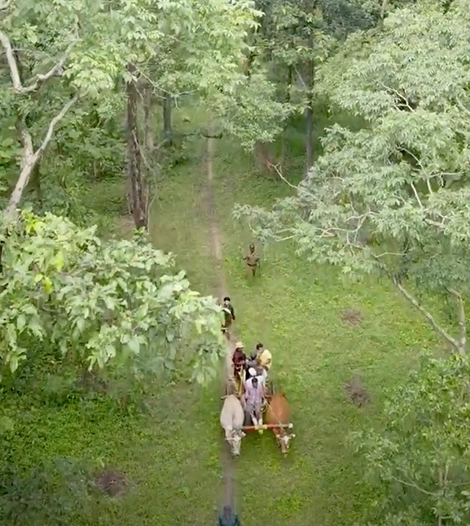
Village visits and traditional experiences like bullock cart rides offer insight into rural lifestyles, fostering respect for community knowledge and sustainable living practices..
Wellness
Screen-free living, quiet surroundings, and time in nature help improve focus, reduce stress, and support emotional well-being through simple, mindful experiences.
Biodiversity
Exploring Pench’s rich habitats, from forests to river ecosystems, helps students understand wildlife diversity, ecological balance, and the importance of conservation.
Frequently Asked Questions
Yes. Mowgli Camp operates under an ISO 9001:2015 Certified Quality Management System, reflecting our commitment to quality, student safety and structured learning.
Mowgli Camp offers experiential learning programmes for school students through nature, wildlife, adventure, and community engagement, helping children develop leadership, confidence, environmental awareness, and essential life skills beyond the classroom.
Mowgli Camp welcomes students from Classes IV to XII. Every programme is age-appropriate and customised to match each school's learning objectives and student abilities.
Unlike sightseeing tours, Mowgli Camp combines experiential learning with adventure, biodiversity, culture, sustainability, teamwork, and personal growth, ensuring every activity has meaningful educational outcomes aligned with school learning.
Mowgli Camp conducts programmes across Himalayan destinations, tiger reserves, rural and tribal villages, biodiversity parks, wetlands, bird sanctuaries, and heritage locations throughout India.
Yes. Mowgli Camp follows strict safety protocols, trained instructors, risk assessments, emergency response plans, and first-aid preparedness to ensure every student's safety throughout the programme.
Mowgli Camp introduces students to wildlife, biodiversity, conservation, geography, ecosystems, rural livelihoods, tribal traditions, leadership, teamwork, communication, responsible travel, and sustainable living through hands-on experiences.
Yes. Mowgli Camp encourages respectful interactions with rural and tribal communities through village walks, cultural exchanges, local crafts, farming practices, traditional cuisine, architecture, and conservation-based learning.
Yes. Mowgli Camp provides regular updates, photographs, and important information to schools and parents throughout the programme, subject to network availability.
Yes. Mowgli Camp programmes are suitable for CBSE, ICSE, IB, Cambridge, and other educational boards, with customised learning outcomes to meet different academic requirements.
Yes. Mowgli Camp organises programmes throughout the year, carefully selecting destinations based on weather conditions, seasonal biodiversity, temperature, and student safety.
Mowgli Camp's rural immersion programme allows students to experience village life by interacting with local communities, exploring traditional architecture, crafts, farming, cuisine, culture, and sustainable lifestyles.
Yes. Mowgli Camp programmes are designed in alignment with NEP 2020, promoting experiential learning, skill development, critical thinking, environmental education, holistic growth, and mindful learning through real-world experiences.