



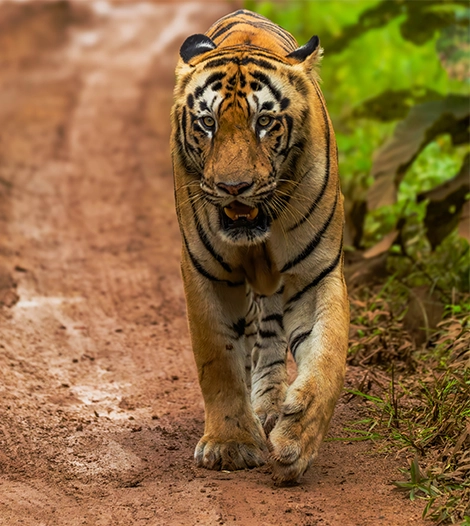
Tadoba–Andhari Tiger Reserve, located in Maharashtra’s Chandrapur district, is one of India’s most exciting wilderness landscapes, known for its high tiger density and thriving biodiversity. Spread across dry deciduous forests, bamboo thickets, and water bodies, the reserve offers a raw and dynamic habitat where iconic tigers like Wagdoh and Choti Madhu have roamed. Alongside tigers, the forest supports leopards, sloth bears, wild dogs, and a vibrant bird population, making every safari an unpredictable and thrilling experience.
For students, Tadoba is not just about spotting wildlife—it’s about understanding the forest as a living system. Learning how to track animals, interpret calls, and observe behaviour builds patience and attention to detail. Interactions with conservationists, local communities, and experts bring real stories to life, helping students connect deeply with wildlife conservation, coexistence, and the challenges of protecting natural habitats.
EDUCATIONAL OUTCOMES
Students develop a deeper awareness of wildlife conservation by experiencing it firsthand—understanding animal behaviour, habitat dynamics, and human-wildlife relationships. The program strengthens observation skills, critical thinking, and encourages students to reflect on their role in protecting natural ecosystem
KEY LEARNING OUTCOMES
An immersive wildlife program that builds ecological awareness, curiosity, and responsibility through real-time forest experiences. Students observe wildlife in natural habitats, understand ecosystems and conservation challenges, and engage in field-based learning while developing patience, observation, teamwork, critical thinking, environmental sensitivity, and a deeper respect for biodiversity and nature.
- Eco tourism ethics through responsible safari practices.
- Personal growth through observation, patience, and reflection.
- Young wildlife enthusiasts exploring predator-prey dynamics.
- Conservation learning through expert interaction and field exposure.
PROGRAMME HIGHLIGHTS
High-engagement wildlife program that combines safaris, expert sessions, and community interaction to create a holistic learning experience rooted in conservation and real-world understanding.
Adventure
Jeep safaris, tracking sessions, and field exploration create thrilling learning moments, helping students build confidence, focus, and a deeper sense of curiosity about the wild.
Culture
Community visits and school interactions offer insight into local life around forests, encouraging empathy and understanding of human-wildlife coexistence.
Wellness
Time spent in nature, away from screens, supports calmness, emotional balance, and mental clarity through mindful observation and quiet immersion.
Biodiversity
Exploring Tadoba’s diverse habitats helps students understand species interaction, ecological balance, and the importance of conserving wildlife for future generations.
Frequently Asked Questions
Yes. Mowgli Camp operates under an ISO 9001:2015 Certified Quality Management System, reflecting our commitment to quality, student safety and structured learning.
Mowgli Camp offers experiential learning programmes for school students through nature, wildlife, adventure, and community engagement, helping children develop leadership, confidence, environmental awareness, and essential life skills beyond the classroom.
Mowgli Camp welcomes students from Classes IV to XII. Every programme is age-appropriate and customised to match each school's learning objectives and student abilities.
Unlike sightseeing tours, Mowgli Camp combines experiential learning with adventure, biodiversity, culture, sustainability, teamwork, and personal growth, ensuring every activity has meaningful educational outcomes aligned with school learning.
Mowgli Camp conducts programmes across Himalayan destinations, tiger reserves, rural and tribal villages, biodiversity parks, wetlands, bird sanctuaries, and heritage locations throughout India.
Yes. Mowgli Camp follows strict safety protocols, trained instructors, risk assessments, emergency response plans, and first-aid preparedness to ensure every student's safety throughout the programme.
Mowgli Camp introduces students to wildlife, biodiversity, conservation, geography, ecosystems, rural livelihoods, tribal traditions, leadership, teamwork, communication, responsible travel, and sustainable living through hands-on experiences.
Yes. Mowgli Camp encourages respectful interactions with rural and tribal communities through village walks, cultural exchanges, local crafts, farming practices, traditional cuisine, architecture, and conservation-based learning.
Yes. Mowgli Camp provides regular updates, photographs, and important information to schools and parents throughout the programme, subject to network availability.
Yes. Mowgli Camp programmes are suitable for CBSE, ICSE, IB, Cambridge, and other educational boards, with customised learning outcomes to meet different academic requirements.
Yes. Mowgli Camp organises programmes throughout the year, carefully selecting destinations based on weather conditions, seasonal biodiversity, temperature, and student safety.
Mowgli Camp's rural immersion programme allows students to experience village life by interacting with local communities, exploring traditional architecture, crafts, farming, cuisine, culture, and sustainable lifestyles.
Yes. Mowgli Camp programmes are designed in alignment with NEP 2020, promoting experiential learning, skill development, critical thinking, environmental education, holistic growth, and mindful learning through real-world experiences.